

Greentech Marine Fuel Saver
A patented, passive fuel enhancer — Proprietary Greentech Fuel Enhancing Technology helps the fuel atomize finer and burn more completely.
One model for every tank, from an outboard's portable tank to an ocean-going ship. It goes inside the fuel tank: no engine work, no power supply, no maintenance.
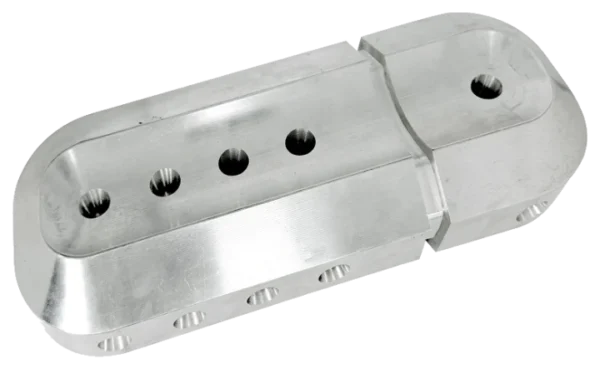 MFS-T10000See the product ↓

Meet the MFS-T10000
A patented, passive fuel enhancer sized for 10,000 litres of fuel. It is placed in the tank once and keeps working there for about ten years.
- Aluminum alloy casing with patented internal components
- No power, no wiring, no moving parts
- No consumables: about 10 years in the tank
- Serial-numbered, with a 12-month product warranty after registration
What changes on board
Fuel that atomizes finer burns more completely. You see it in three places.
 01
Less fuel per hour and per mile
Same work from less fuel. Read it per engine running hour or per nautical mile on your own vessel.
 02
Cleaner exhaust
More complete combustion: lower CO and HC in the exhaust.
 03
Fewer carbon deposits
Reduces engine carbon deposits: less carbon left behind in the engine.
How it works, in three steps
- In the tankThe MFS sits in the fuel
- At the injectorThe fuel atomizes finer
- In the cylinderIt burns more completely

Before installation: ask the engine maker
More complete combustion raises engine speed (RPM) and output. Please confirm with the engine manufacturer that the engine has room for this within its rating. Engines from established makers such as Caterpillar, Cummins, Yanmar, Volvo Penta and Perkins are generally built with that margin. We supply the product specification they need.
From fishing boats to ocean-going ships
Any marine diesel engine on MGO, FO 180 or FO 380, and gasoline outboards and small craft. The size of each tank sets the model and the number of units.
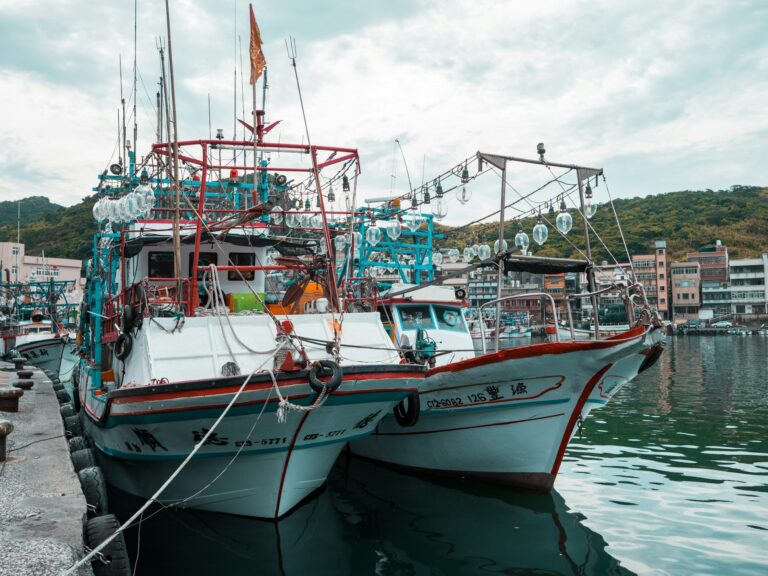 Fishing boatsMGO · 1,000–5,000 L · D50 × 2–10
 Pilot, patrol & crew boatsMGO · 2,000–10,000 L · D50 × 4–18 or MFS-T10000
 Ferries & passenger shipsMGO · 5,000–20,000 L · D50 or MFS-T10000 × 1–2
 Tugs & workboatsMGO / FO 180 · 5,000–15,000 L · D50 or MFS-T10000 × 1–2
 Coastal cargoMGO / FO 180 · 5,000–20,000 L · D50 or MFS-T10000 × 1–2
 Offshore supportFO 180 · 10,000–50,000 L · MFS-T10000 × 1–5
 Tankers & cargo shipsFO 180 / FO 380 · 50,000–200,000 L · MFS-T10000 × 5–20
 Bulk & container shipsFO 380 · 100,000 L + · MFS-T10000 × 10 +
Typical tank sizes, per tank. Under 10,000 L: one D50 per 500 L. From 10,000 L: one MFS-T10000 per 10,000 L. Every vessel is specified from its own survey.
Boats and tanks under 10,000 L
A diesel tank up to 500 L takes one D50. Larger tanks take one D50 per 500 L (a 2,000 L tank takes four), or a made-to-order unit. Boats save fuel too. More complete combustion raises engine speed and output, so ask the engine maker first whether the engine has room for it.
Engines we see most
- CaterpillarC7, C9, C12, C18, C32, 3500
- CumminsQSB, QSC, QSM, QSK, KTA
- PerkinsM, 1100 / 1200 / 2000
- Volvo PentaD3, D4, D6, D8, D11, D13
- Yanmar4LHA, 6LY, 6AYM, 6EY
Engine not on the list? Send the survey and we check the rating first.
How many, and where they go
Every tank gets its own units, placed inside the tank: one MFS-T10000 per 10,000 litres, or one D50 per 500 litres below that. Enter your tanks and read off the models.
Size your tanks
Enter the capacity of each tank. Separate tanks are counted separately.
How many units
Below 10,000 L per tank: one D50 per 500 L, so 1,000 L takes two, 2,000 L four and 5,000 L ten. We confirm the number for every tank from your survey.
Where it goes
Inside the tank, above the sludge layer. No change to the engine or the fuel system.

From survey to installation
- Send the vessel surveyEngine make and model, rating, fuel, and the size of every tank.
- Check with the engine makerConfirm the engine has room for more output within its rating.
- Written specification and quoteUnits for each tank, in writing.
- Placed in the tanks at berthDuring a normal port call. No dry-docking.

Then watch the trend
Log fuel per engine running hour or per nautical mile, before and after, over 30–180 days. One voyage swings with weather, load and sea state; the trend is what counts, and it shows most at steady cruising load. We supply the logging sheet.
Boats save fuel too
The same drop-in fuel enhancer, in the sizes small craft use. Open the cap and put it in: nothing on the engine changes. More complete combustion raises engine speed and output, so ask the engine maker first whether the engine has room for it.
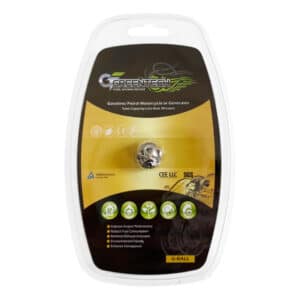
Outboards & personal watercraft
Portable tank up to 20 L · G-BallTenders, small fishing boats and jet skis with a portable tank. Drop one G-Ball into the tank.

Small boats with a built-in tank
Up to 60 L · G10A · up to 100 L · G10 / G11Runabouts, pontoons and small sterndrive boats. Drop it in through the fuel fill, one unit per tank; over 100 L, ask us for a made-to-order unit.

Water at the bottom of the tank or E10 gasoline is no problem for the casing. G-series and D-series are sold online; the MFS-T10000 is quoted after a survey.
Build it into the fuel line: the Greentech Capsule
If you design or refit fuel systems, we supply the Greentech Capsule, the inline enhancer core, with its dimensions and the flow and contact-time conditions it needs. You design the housing and the fittings for your vessel; the capsule keeps its Greentech serial number and warranty.
- Capsule with dimensions and installation conditions
- Specification sheet, serial number and 12-month product warranty
- Survey form and the measuring method for your first vessel
Specifications and documents
- Models
- MFS-T10000 for ships; D-series and G-series for boats
- Technology
- Proprietary Greentech Fuel Enhancing Technology
- Fuels
- MFS-T10000: MGO, FO 180, FO 380 · D-series: marine diesel / MGO · G-series: gasoline
- Sizing
- One MFS-T10000 per 10,000 L of tank capacity; below 10,000 L one D50 per 500 L; each separate tank gets its own
- Small craft
- Gasoline: G-Ball (≤ 20 L), G10A (≤ 60 L), G10 / G11 (≤ 100 L). Diesel: D-Ball (≤ 20 L), D10 / D11 (≤ 100 L), D20 / D21 (≤ 200 L), D50 / D51 (≤ 500 L)
- Placement
- Inside the fuel tank, above the sludge layer
- Dimensions
- 315 × 130 × 65 mm
- Casing
- Aluminum alloy casing with patented internal components
- Maintenance
- None: no consumables, no moving parts
- Service life
- About 10 years
- Warranty
- 12 months on the product, after serial-number registration
For your chief engineer
 Product introductionRead online or download the PDF · version 5
 MFS-T10000 specification sheetPDF · dimensions, casing, placement
 Vietnam Register reply on shipboard usePDF · Vietnamese original + English translation
Questions
How many units does my vessel need?
Under 10,000 litres per tank: one D50 per 500 litres, so a 2,000 L tank takes four, or a made-to-order unit. From 10,000 litres: one MFS-T10000 per 10,000 litres, placed inside the tank. Separate tanks each get their own units. Your survey gives us the tank layout, and the written specification sets the exact number. Size your tanks →
Can I use it in a gasoline boat?
Yes. Outboards and personal watercraft with a portable tank up to 20 L take a G-Ball; built-in tanks up to 60 L take a G10A, and up to 100 L a G10 or G11. Open the cap and put it in. For larger gasoline tanks, ask us.
Can I buy the boat sizes online?
Yes. The G-series and D-series are sold online; the MFS-T10000 is specified and quoted after a survey. Because more complete combustion raises engine speed and output, ask the engine maker first whether the engine has room for it.
Is water at the bottom of the tank a problem?
No. Water at the bottom of the tank or E10 gasoline is no problem for the casing. In a diesel tank the unit sits above the sludge layer.
Where does it go? Does it need dry-docking?
Inside the fuel tank, above the sludge layer. It is placed during a normal port call: no dry-docking, and no change to the engine or the fuel system.
Does it suit every marine engine?
Most engines from established makers have the margin for it. Because more complete combustion raises engine speed and output, please confirm with the engine manufacturer before installation. We supply the specification they need.
What about class and the engine maker?
Greentech MFS makes no change to the engine or the fuel system. Vietnam Register replied in writing in August 2026 that such a device is not part of a ship's structure, machinery or electrical systems; its use in the tank must follow the fuel-system and engine-room safety rules, and on international voyages it is recorded in the ship's SEEMP for review by the class society. We supply whatever specification your class society or engine maker asks for. Vietnam Register reply (PDF) →
How do we see the result?
Same vessel, same engine, before and after: fuel per engine running hour or per nautical mile, over 30–180 days. We supply the logging sheet.
Is there any maintenance? How long does it last?
No maintenance. There are no consumables and no moving parts, and the MFS stays in the tank for about ten years.
Is there a warranty?
Yes. Register the serial numbers for the 12-month product warranty. It covers the unit itself: if something goes wrong with it after installation, we replace it with a new one. Verify & register →

Tell us about your vessel
Send the survey: vessel type, engine, fuel and tank sizes. We come back with a written specification and quote for every tank.
Marine engine dealers, shipyards and ship chandlers: become a Greentech distributor →