Why marine fuel use adds up
Fuel is one of the biggest costs of running a vessel. ABS calls it a major operating expense, and IMO training material notes that when bunker prices are high, fuel can become a ship’s single largest operating cost.
Small boats feel it too: FAO notes that fishers can’t recover higher fuel costs by charging more for their fish.
Saving starts with measuring. Ships of 5,000 gross tonnage and above must already log and report their fuel use and distance sailed under MARPOL Annex VI, and the same habit pays off on a small workboat.
Keep the hull and propeller clean
Algae, sea grass and barnacles roughen a hull, and MAN Energy Solutions explains that frictional resistance grows as fouling builds up. IMO’s ship energy-efficiency guidelines sum it up: “Generally, the smoother the hull, the better the fuel efficiency.”
Even thin slime matters. An IMO GloFouling study estimated that slime just 0.5 mm thick on up to half a hull could raise a ship’s greenhouse-gas emissions by 25–30%, depending on the ship and its speed (the study assumes emissions track fuel use). A fouled propeller, it adds, can do as much harm as a fouled hull, yet is far cheaper to fix.

Ships
Inspect the hull in the water regularly, and polish the propeller (twice a year, suggests IMO’s GreenVoyage2050 portal). Many ports ban in-water hull cleaning, so check local rules.
Small boats
Haul out and scrape the bottom, or renew antifouling paint regularly if the boat stays afloat. In the tropics, FAO warns, hull fouling can push fuel use up 7% after one month and 44% after six months if no antifouling paint is used.
Speed: the biggest lever
No single factor affects fuel use more than speed, according to FAO. By a common rule of thumb used by IMO, a displacement ship’s power need rises with the cube of its speed, so easing off a little saves a lot.
Rule of thumb for displacement ships
On that basis, slowing by 10% cuts propulsion power and fuel by about 27%, or about 19% over the voyage once the longer passage is counted. That is the idea behind slow steaming.
Small boats follow the same curve. In FAO figures for a 10 m trawler, slowing from 7.8 to 7.02 knots cut fuel per nautical mile by 28%. FAO’s manual suggests about 2.1 × √(waterline length in meters) knots as a fuel-saving speed for small displacement boats.
On planing boats, fuel use jumps at semi-planing speed, so stay below it or settle at an economical planing speed.
Don’t overdo it. IMO’s guidelines warn that dropping below the optimum speed actually raises fuel use, and very slow running can bring vibration, soot deposits and extra engine wear.

Trim and loading
IMO’s guidelines note that every draft has a trim at which the hull drags least, and finding it can save significant fuel. The GreenVoyage2050 portal puts the typical gain at 0.5–2% of main-engine fuel for most ship types.
- Plan cargo and ballast with trim in mind; less ballast is not automatically more efficient.
- Use trim tables or trials for your usual drafts and speeds.
- On small boats, BoatUS suggests seating passengers so the boat runs level, trimming with tabs for the best economy, and leaving unneeded gear and water ashore.

Engine upkeep
A neglected engine burns more fuel for less work. In one study cited by FAO, researchers compared two identical engines on one canoe: the badly maintained one needed double the fuel, yet managed only 85% of the other’s speed.
Follow the maker’s service intervals, and watch:
- Injectors: rising fuel use, lost power and black smoke are the first signs they need replacing.
- Air filters: in an engine-room simulator study, a clogged air filter lowered cylinder pressures and raised fuel consumption.
- Fuel filters: replace them on schedule and fit a water separator; pumps and injectors need clean fuel (FAO).
- Turbocharger: clean it as its manual specifies. Turbocharger maker Accelleron notes that regular cleaning gives higher scavenge-air pressure and cooler exhaust.
- Exhaust: a well-kept diesel’s exhaust is barely visible.

Fuel quality and treatment
Clean fuel of the right grade keeps engines reliable and efficient. Know what you burn:
- MGO (marine gas oil) is a distillate fuel: the DMX, DMA and DMZ grades of the ISO 8217 marine fuel standard.
- FO 180 and FO 380 (often called IFO 180/380) are much thicker residual fuels, named for their viscosity: in ISO 8217 terms, at most 180 or 380 mm²/s (centistokes) at 50 °C.
- Residual fuels must be heated, both in storage and for burning, and are settled and centrifuged on board before they reach the engine.
Water and sludge sink to the tank bottom, so:
- On ships, open the settling-tank drains on a regular schedule to clear settled water and sludge, and keep purifiers in good order; a high sludge level can point to poor purifier maintenance.
- On residual fuel, hold the right injection viscosity; otherwise the fuel atomizes poorly, hurting efficiency and emissions.
- On small boats, maintain the filters and water separator (step 4).
Measure it: liters per running hour and per nautical mile
Two simple ratios cover most vessels:
Liters per running hour
fuel used ÷ engine hours
Good for workboats, generators and time on the fishing ground.
Liters per nautical mile
liters per hour ÷ speed in knots
FAO’s manual rates fuel per mile as the best yardstick on passage.
For numbers you can trust:
- Compare like with like: same vessel, same main engine, similar loads and routes.
- Watch the trend over 30–180 days, not single trips; weather, current and load swing the daily figures.
- Log fuel bunkered and consumed, running hours, distance, and notes on load and weather. Ships can build on the daily noon reports IMO recommends.
- Use tank soundings or flow meters corrected for fuel density and temperature. On a diesel, meter both the supply and return lines; linked to GPS, a flow meter can show fuel per mile.
- Run trial legs both ways, with and against the wind.
Good records, FAO says, are the only way to judge whether new technology paid off.

Where Greentech fits: one model for every tank
Steps 1–6 cut the fuel your vessel needs. Step 7 is about the fuel itself.
Greentech is a patented, passive fuel enhancer that sits in the fuel tank: Proprietary Greentech Fuel Enhancing Technology helps the fuel atomize finer and burn more completely. Designed and made in Taiwan.
Pick the model by the size of each tank, and count each separate tank on its own. There is no engine modification and no fuel-system change, and units are normally installed while the vessel is in port.
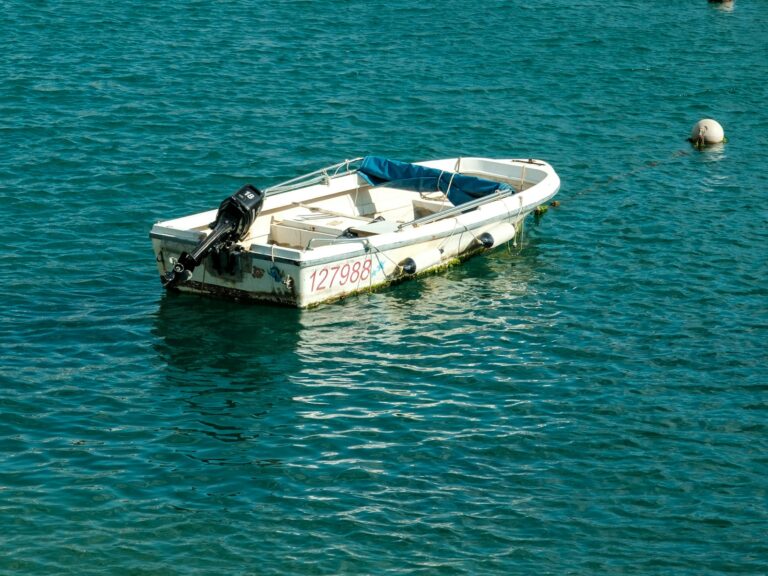
Gasoline outboards and small boats
See outboards and gasoline boats.



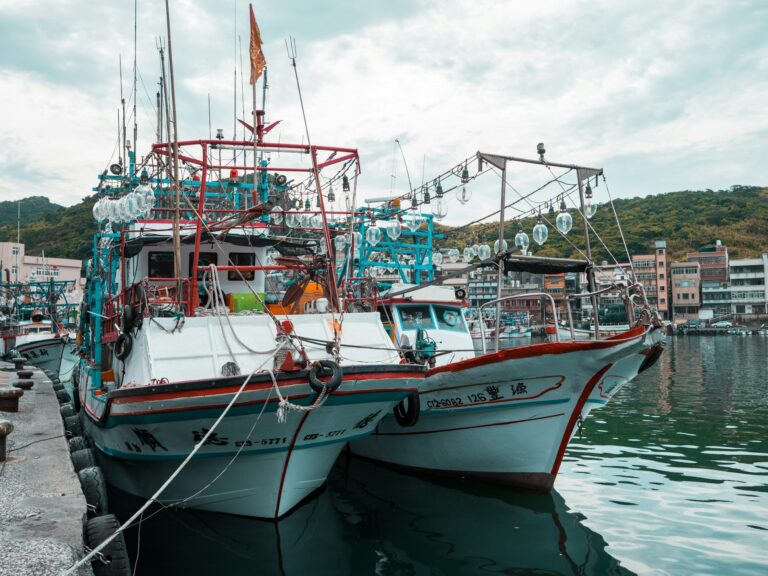
Diesel small boats and workboats
See fishing boats and generators.
 Tank up to 20 LD-Ball
 Up to 100 LD10
 Up to 200 LD20
 Up to 500 LD50one unit
- Over 500 Lone D50 per 500 L (a 2,000 L tank takes four), or a custom pre-order
- Generator day tanka generator with its own day tank gets its own unit
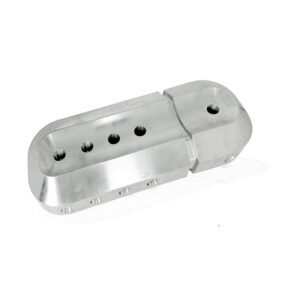
Ships
For a single tank of 10,000 L or more, use one Greentech Marine Fuel Saver (MFS-T10000) per 10,000 L, placed inside the fuel tank above the sludge layer. We start with a pre-installation survey and quote in writing; see the product introduction for details.

Shipyards and marine engineering firms
Want an inline solution? Ask about the Greentech Capsule, the inline enhancer core. The yard designs the housing and fittings for the vessel, and the capsule keeps its Greentech serial number and warranty.
Enter each tank’s capacity to see the model and quantity: small boats add to cart, large vessels get a quote.
Boats save fuel with Greentech too. Because the fuel burns more completely, engine speed and output can rise, so please check with your engine manufacturer before installation. Results vary with engine condition and operating conditions.
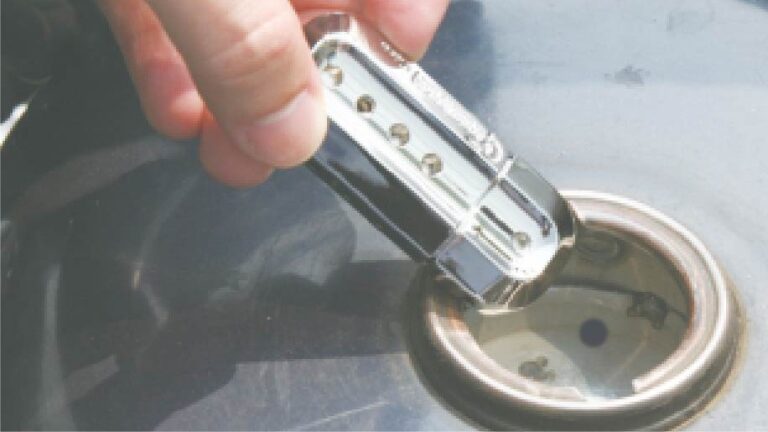
Fuel is flammable: stop the engine before opening the tank, and do not smoke near the tank. Portable tanks: drop in through the cap opening. Built-in gasoline tanks: through the 1.5-inch filler or an inspection port. Diesel tanks: through the filler or an inspection port, spreading the units across the tank.
FAQ
How many units does my boat or ship need?
Count each tank on its own: one D50 per 500 L of diesel tank, and one MFS-T10000 per 10,000 L for ship tanks of 10,000 L or more. Smaller tanks take one unit sized to the tank; the tank calculator shows which.
Where is it installed?
Inside the fuel tank: through the cap opening, filler or an inspection port on small boats, and above the sludge layer on ships.
Do we need to take the vessel out of service?
Usually not. Units are normally installed at port or at the dock, with no engine or fuel-system modification.
How do we know it is working?
Measure fuel per running hour or per nautical mile before and after, under the same conditions: same vessel, same main engine, similar loads and routes. Step 6 above shows how.
Can it be used on gasoline boats?
Yes, with the G series. For gasoline tanks over 100 L, ask us.
Can I buy the small-boat models online?
Yes. Add G and D series models to the cart on our boats page. The Greentech Marine Fuel Saver (MFS) is sold by quotation.
What about water or sludge at the bottom of the tank?
Keep draining water as normal good practice, and place units above the sludge layer. Greentech does not replace fuel treatment or separators.