Log your fleet’s fuel for a few weeks, online or on our Excel worksheet, and you will see what Greentech is worth on your own vehicles before you commit. Prefer to skip the maths? Order straight away: it starts working from the first drive after installation.
Two to four weeks, thirty days if you can. Fill each vehicle to full every time and log the vehicle, date, odometer and litres, online in the Fleet Fuel Log or on the worksheet. If you already keep three months of per-vehicle fuel records, that is your baseline.
Get a quote and install
Send us the fleet and tank details. We match the models, quote, and arrange installation through the authorised distributor where one serves your market. Units go into the fuel tank, or into the gas line for LPG and CNG. No engine modification.
Run as usual
Same vehicles, same routes, same drivers. Keep logging every fill-up, and change one thing at a time.
Read your result
The worksheet compares before and after for every vehicle, works out the fuel saved, and the payback on your own fuel price and your quote.
If emissions are part of the test. Fitting the device raises combustion temperature, which burns off carbon already sitting in the engine — and that produces carbon monoxide while it is happening. A CO reading taken in the first weeks can therefore come out higher than the baseline, and settles once the deposits have cleared and the engine is running at its best. Take the emissions comparison at baseline, again after a few thousand kilometres, and again at three months. Hydrocarbons and smoke can be read earlier.
02
Or order straight away
You do not have to measure first. Order directly and Greentech gets to work from the first drive after installation: more complete combustion, less fuel burned for the same distance and less smoke from the exhaust. An easy step for the fuel bill and for your emissions targets alike.
It drives differently, too: a lighter throttle and more pull on the hills
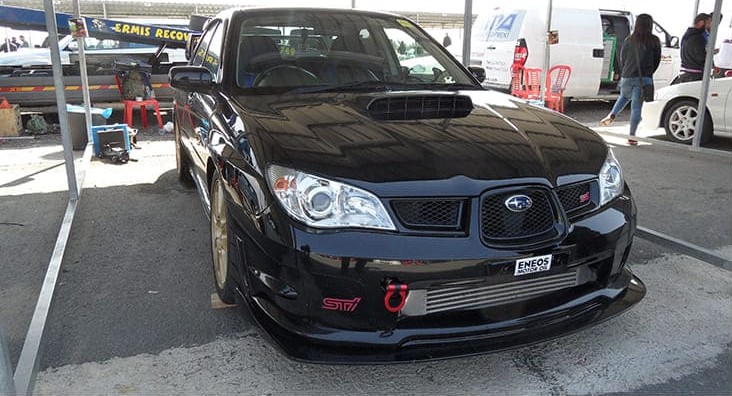
More complete combustion puts more force behind the same press of the pedal. Pulling away gets easier and climbs no longer need the pedal to the floor. A dynamometer measures it; a race track times it.
On the dynamometer
+100 Nmtorque
Peak power up 9 kW, turbo boost unchanged. Ford Falcon FPV F6 turbo, Elite Automotive chassis dynamometer, Australia, 2007.
“MTECH” and “Moletech” on the reports and some letters are the names our first-generation product was sold under.
“The drivers noticed that the trucks which installed Greentech devices performed better in overall engine performance, with less exhaust emissions.”
Hesham Shalaby, Fleet Maintenance Manager, Steady Routes Logistics Saudi Arabia · Volvo heavy trucks · 2023 · Letter (PDF)
“I used to have to press hard on the gas-pedal in order to make it to the top of the steep hill on my way home … Now I only have to press it about half way, and the car easily climbs to the top of the hill.”
Tom Yang, then our US importer his own Plymouth Grand Voyager 3.5 V6 · first-generation product · 2007 · Original (PDF)
“The bike feels much freer, and now I need fewer revs to reach top speed. I always had to refuel on the mountain road to Alicante; now I get there on one tank with fuel to spare.”
Álvaro Martín Valencia, Spain · Kymco 125 scooter · first-generation product · 2008 · translated from Spanish · Original (PDF)
“Overall, MTECH Fuel Saver has produced more horsepower and increased in mileage.”
Pete Darkhasti, taxi driver Sydney, Australia · LPG cab · first-generation product · Original (PDF)
“Better throttle response, a revvier engine, livelier acceleration.”
Opel Corsa van Reference case from our Hungarian distributor · G11 · 2010 · translated from Hungarian · Original (PDF)
“Firmer acceleration, a quieter engine and 14.19% less diesel.”
FIAT Ducato 2.8 TDI van Reference case from our Hungarian distributor · D11 · 2010 · translated from Hungarian · Original (PDF)
Results vary with vehicle condition, load, route and driving. Keep logging in the online Fleet Fuel Log after installation and see your own number, vehicle by vehicle.
03
What we provide
The worksheet and the methodThe same before-and-after logic we use in our own road testing, so your result is comparable to the reports in our document library.
Model selectionMatched to your tank capacity and fuel type. Getting this wrong is the most common reason a result under-performs.
Quote and installationFrom the authorised distributor where one serves your market, and from Taiwan where there is none.
VesselsBoats save fuel too. Gasoline boats take the G-Ball, G10A or G10 by tank size; diesel boats and marine generators take one D50 per 500 L of each tank, up to 10,000 L per tank: size and buy at Greentech for boats. Ships from 10,000 L per tank use the Greentech Marine Fuel Saver, and their logs can be kept in our Fuel Tracker portal. Combustion becomes more complete, so engine speed and output can rise: please confirm with the engine manufacturer that the engine has room for this within its rating.
04
What makes your numbers readable
Clear numbers come from three habits, and none of them depends on the size of the fleet.
Per-vehicle fuel records
Fuel cards, on-site pump logs, telematics or a disciplined driver logbook — any of them work, as long as the figures are per vehicle and not per depot.
A stable operating pattern
The same vehicles, routes and drivers for the whole period. A truck that moves from city delivery to long-haul halfway through tells you nothing.
Someone who owns the data
One named person who records the figures every week. This is the requirement fleets underestimate most often.
Measure a few trucks carefully, then fit the whole fleet with confidence.
05
How your market is served
Where Greentech has an authorised distributor in your country, they handle supply, installation and local commercial terms. We pass your request to them and they contact you directly. Where there is no distributor in your market, we work with you from Taiwan.
Units are supplied on a normal order, whether you start with two vehicles or the whole fleet.
Tell us about the fleet and we come back with the models and a quote. If you have measured a baseline, add the figures in the last box. If not, that is fine too.
Good to know
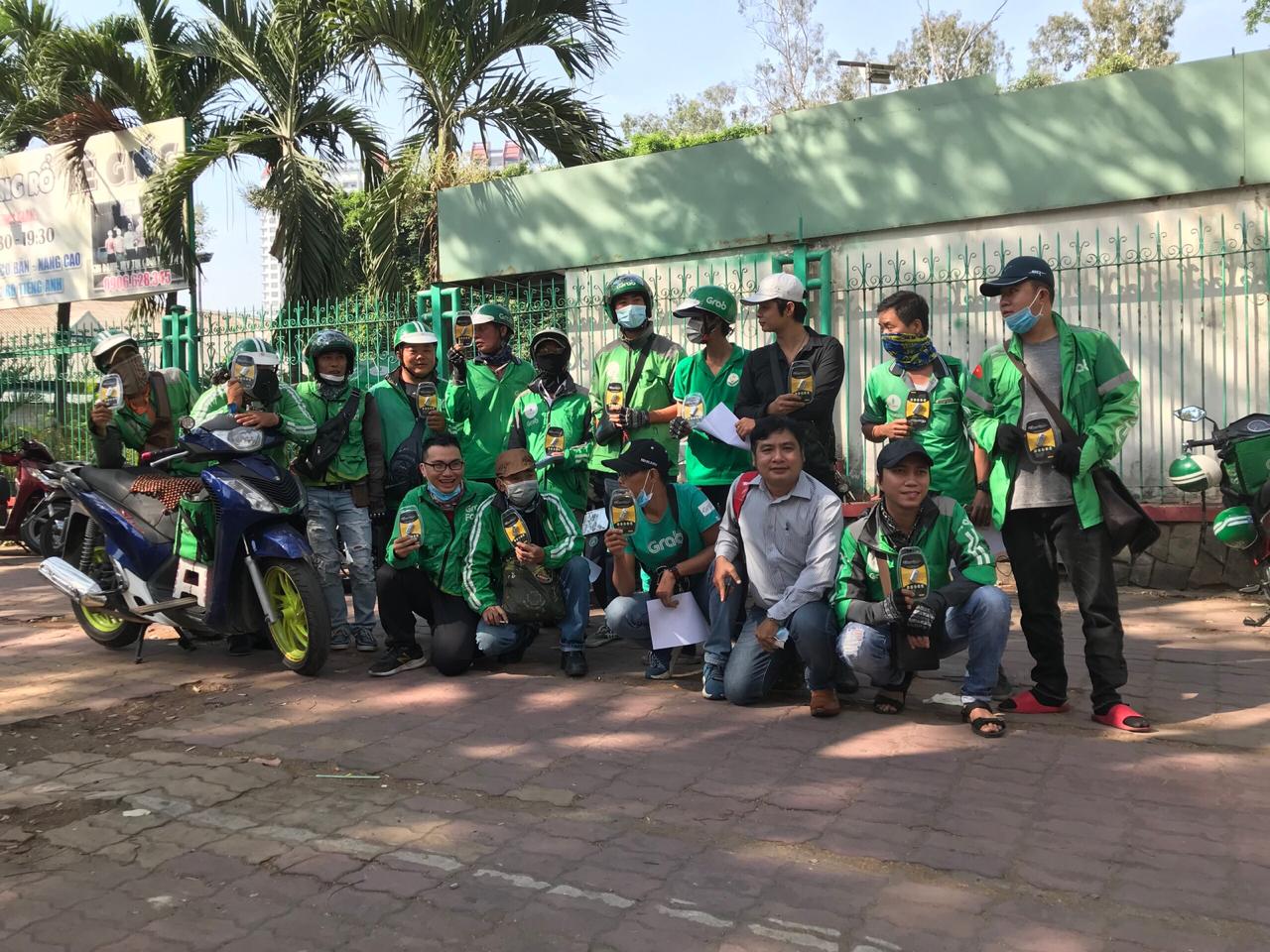
Independent tests and fleet programmes in fifteen countries show the saving. Results vary with engine, duty cycle, route, load and maintenance, and your own fuel records turn that into your own number: the figure that wins sign-off for the whole fleet.
Start logging before you order and the Fleet Fuel Log does the maths for you: before and after, vehicle by vehicle, with a report you can print and share. Commercial terms are agreed per order.